How does data recovery really work? An honest explanation — and why we charge 179,90 €
We open the lab door: the 4 ways we access your data, why our fixed price works and when, in rare exceptional cases, it costs more. No jargon, no gimmicks.
Need your data back urgently? Our Data recovery at a fixed price is performed at chip level, is only charged for if successful, and covers iPhones as well as Samsung Galaxy and all other Android smartphones.
Your phone no longer turns on. The screen stays black, water has got inside, or it is stuck in an endless boot loop. And somewhere inside are the things you cannot replace: photos of your children, voice messages, WhatsApp chats, business data.
If you Google “data recovery” now, you will quickly come across prices of 800, 1.000 or 1.500 euros — and plenty of technical jargon that frightens rather than helps. This article does the opposite: we open the lab door and show you, without secrets, what really happens during data recovery. By the end, you will know exactly what to expect — and why our pricing remains fair.
A quick introduction so you know who is speaking: we have been 2012 in business, work at chip level and are Germany's most-reviewed phone repair shop with over 6.000 reviews and more than 350.000 followers. The explanations below come from thousands of real cases — not a marketing brochure.
There is no single solution Data recovery
This is the biggest misconception. “Data recovery” sounds like a single button you press. In reality, it is a toolbox — and which tool we need depends on the condition of your device. Essentially, there are four approaches.
The 4 ways to access your data
Approach 1: Reading the memory directly (the standard case)
On many devices, we can access the memory chip — your phone's “memory bank” — directly and copy the data out. Imagine removing a hard drive from a broken computer and connecting it to a working one. This is the most straightforward case. That is exactly why a fixed price works here.
Approach 2: Reviving the device first (encryption)
This is where things get interesting. On many modern smartphones, the storage is encrypted — on iPhones as well as current Samsung and Android devices. This means that even if we read the chip, all we get is unreadable scrambled data — the key is tied to the device.
As a result, we first have to get the phone to boot up again, enter the screen lock code — and only then can the data be properly backed up in decrypted form. Sometimes we literally revive a “dead” device, not to repair it, but simply to access the data. (That is why your screen lock code is often worth its weight in gold to us.)
Approach 3: Software and forensic methods
Not every failure is caused by hardware damage. A classic example is a boot loop — the phone keeps restarting and never finishes booting up. A common cause: the storage is simply completely full or a software error is preventing startup. The logic board is perfectly fine. Here, we work at the software level or extract the data using forensic methods — no soldering, no chip replacement, but specialist expertise.
Approach 4: The logic board swap (the complex exception)
Then there are the difficult cases: severe Water damage, a badly bent logic board, a heavy fall — or, unfortunately often, a device that another repair shop has tinkered with without really knowing what they were doing. If the logic board is so badly damaged that none of the approaches above work, there is no alternative to a logic board swap .
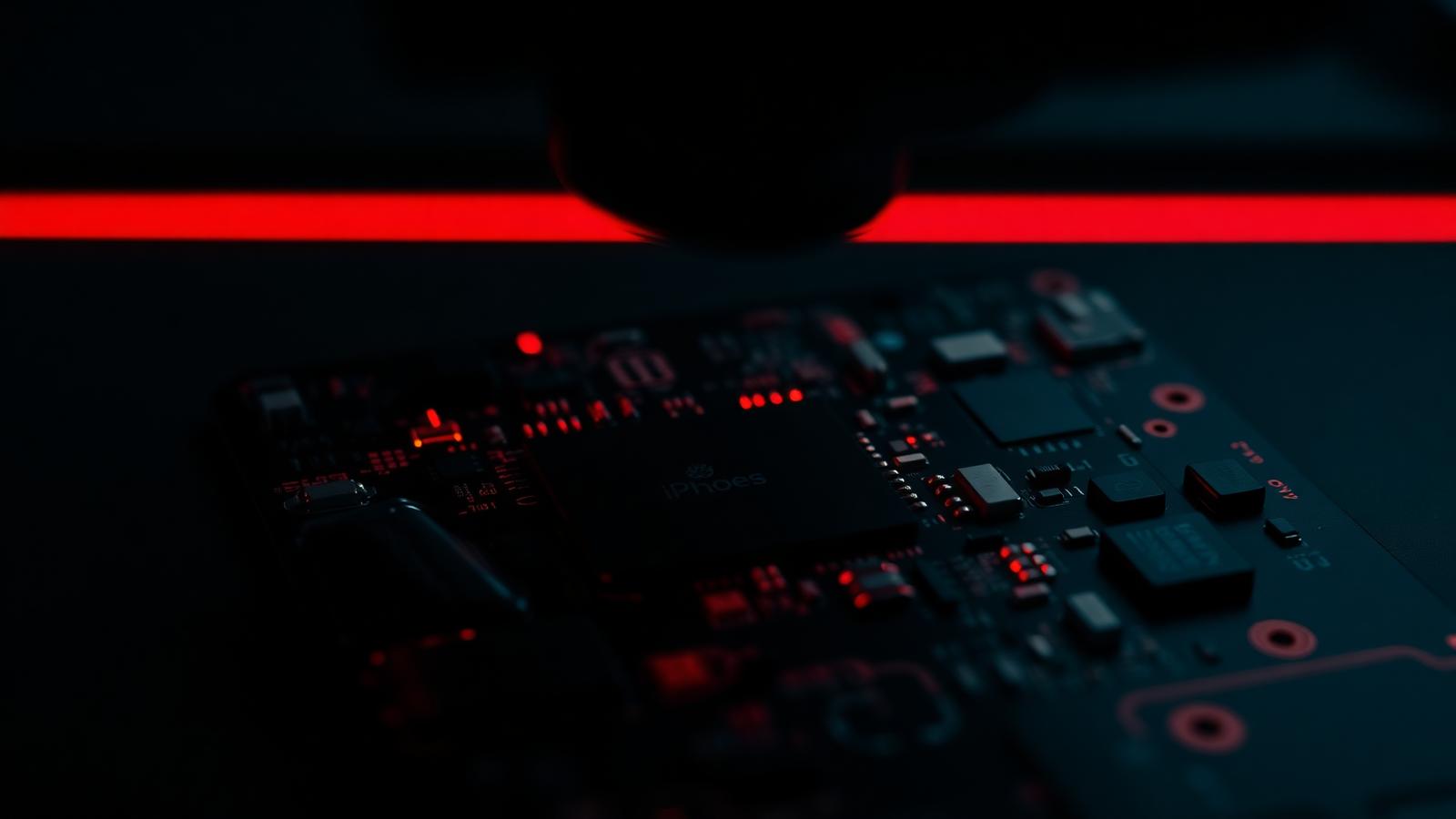
This involves transferring the essential components — the processor, memory chip and, on some models, a special chip (the EEPROM, essentially the logic board's “ID card”) — from your destroyed logic board to a working donor logic board. This is delicate, millimetre-scale work under a microscope, taking a good 4–5 hours of work, plus sourcing the right replacement logic board. That is why — and only why — the price may increase in these cases.
See how much work board-level data recovery really involves in this video from our workshop — here, we recover data from a water-damaged Samsung Galaxy S23:
Data recovery after water damage on a Samsung Galaxy S23 — straight from our workshop.
Why are we cheaper than providers charging 1.000 euros?
Because we have mastered these techniques since 2012 and do everything ourselves at chip level in our own lab — nothing is outsourced. For the vast majority of devices, data recovery is, frankly, not rocket science, if you know your craft. That is exactly why we can offer a fair fixed price where others charge four-figure sums.
Our view: many of these high prices simply exploit people's distress. Someone desperate to save their last remaining photos will pay almost any price. We do not think that is right — so we do things differently: transparently and at a fixed price. We have summarised the tactics some providers use and how to spot a disreputable data recovery service in a separate article: the biggest data recovery scams.
And when does it cost more? An honest answer.
Only in the fourth case above — a truly exceptional logic board case. This affects a small proportion of all devices. And even then, you are fully protected:
- ✓You receive a no-obligation quote in advance and can take your time deciding whether to accept or decline it. No surprises on the bill.
- ✓You only ever pay if recovery is successful. If no data is recovered, we charge neither for labour nor for replacement parts — even after 4–5 hours of work.
- ✓If the memory is technically beyond recovery, the only charge is the diagnostic fee of 29,90 € .
In other words: in an extreme case, you risk nothing beyond the diagnostic fee. The risk of this complex procedure is borne by us — not you.
Bottom line: no fine print, just plain language
For the vast majority of devices, your data recovery costs 179,90 € — a fixed price, including shipping both ways, and you only pay if we succeed. Only if your logic board is a truly extreme case will we openly discuss the work involved with you beforehand — and even then, you remain fully protected.
That is the whole “trick”. No catch, no gimmick. Exactly how we would want to be treated ourselves.